
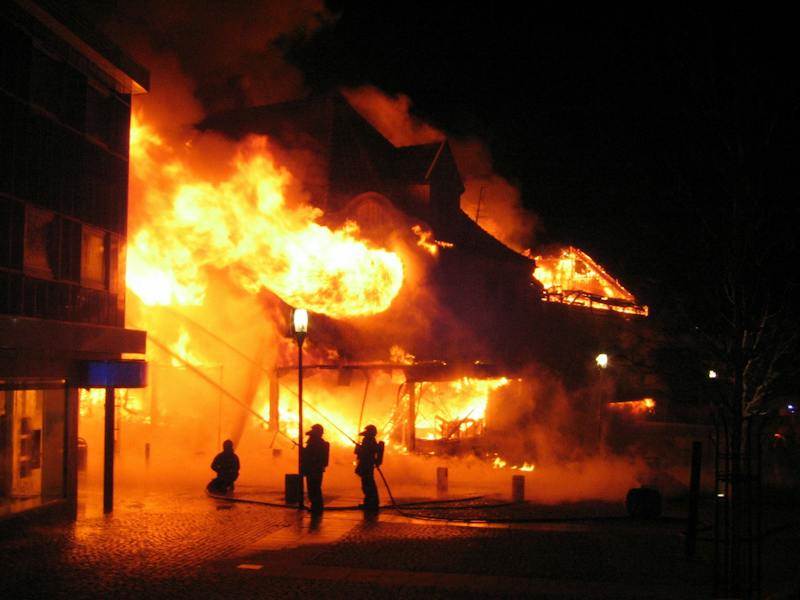
Asbestos after a fire in Los Angeles is a risk many commercial property owners do not expect. Heat, impact, and firefighting can damage or disturb older building materials, and the cleanup that follows can release invisible fibers. Knowing what may be inside your building protects your staff, your tenants, and your timeline.
This guide covers the hazardous materials that commonly turn up after a commercial fire, why firefighting water adds to the problem, how testing works, and which California rules apply. Quality Environmental has served Southern California for more than 20 years by handling abatement, restoration, and demolition under one site-specific plan.
Why Fire Damage Can Release Asbestos in a Commercial Building
Fire damage can release asbestos when burned, cracked, or water-soaked materials crumble, releasing fibers into the air. According to the South Coast AQMD, buildings constructed before 1984 may contain asbestos-containing materials, and even newer buildings can contain some.
Common asbestos-containing materials in commercial buildings include:
- Roofing materials and flashing
- Floor tiles and the mastic beneath them
- Acoustic ceilings and soundproofing
- Insulation and pipe coverings
- Cement pipes and heating ducts
These materials are often hidden above ceilings, inside walls, or under newer finishes. That is why a building that appears stable after a fire can still pose a serious exposure risk to crews, occupants, and anyone walking the site.
Los Angeles has a large stock of mid-century offices, schools, hospitals, and warehouses, so the odds of encountering these materials are higher than many owners assume. Any fire that damages ceilings, flooring, or mechanical systems in such a building should be treated as a potential asbestos event until testing proves otherwise.
Quality Environmental’s specialty asbestos removal work covers building types that often remain partly occupied during a project:
- Schools
- Hospitals
- Courthouses
- Churches
- Office buildings
Other Hazardous Materials Found After a Commercial Fire
Other hazardous materials found after a commercial fire include lead-based paint, ash and soot, damaged chemical storage, and mold. Asbestos rarely occurs alone, so a complete assessment examines all contaminants before demolition or cleanup begins. This includes:
- Lead-based paint: Common in older commercial buildings, and heat, sanding, or demolition can turn it into contaminated dust.
- Ash, soot, and dust: Cal/OSHA warns that disturbed ash, soot, and dust can irritate or damage the lungs of cleanup workers.
- Stored chemicals: Fires and the water used to fight them can damage or dislodge tanks, drums, and pipes that hold hazardous chemicals, according to Cal/OSHA.
- Mold: Moisture left behind by firefighting can support mold growth in walls, ceilings, and flooring.
Because these hazards overlap, a single plan should address them together. Quality Environmental crews are trained in asbestos, lead, and mold abatement as well as fire, smoke, and water restoration, so unexpected discoveries do not stall the project.
How Firefighting Water Adds to the Hazard
Firefighting water increases the hazard in several ways:
- It soaks insulation, drywall, and flooring
- It spreads contamination into new areas
- It creates the moisture mold needs
- It carries soot and debris into areas the fire never reached
Mold can begin spreading within 72 hours of exposure to moisture, so extraction and drying need to start quickly. Quality Environmental’s water damage and mold remediation teams work alongside the fire crew and use:
- Industrial dehumidifiers
- Air movers
- Moisture detection equipment
These tools dry concealed cavities that surface checks miss.
Moisture also complicates testing and demolition sequencing. Contamination can travel to clean areas when:
- Wet materials are removed before they are sampled
- Drying equipment moves air across disturbed debris
A coordinated plan keeps drying, mold control, and asbestos containment in the right order, so one repair does not undo another.
How Asbestos Testing Works Before Cleanup Begins
Asbestos testing after a fire starts with a survey of the affected areas and laboratory analysis of suspect materials. Fibers are invisible, so the only way to confirm asbestos is professional inspection and lab results. Even after a sudden event, the South Coast AQMD says owners must still complete an asbestos survey before demolition or renovation.
A typical sequence looks like this:
- Confirm the structure has been examined and cleared as safe to enter.
- Survey the building with qualified environmental consultants.
- Collect samples and send them to independent, third-party labs.
- Develop a site-specific abatement plan based on the results.
Cal/OSHA adds that fire-damaged structures should not be worked in until a registered engineer or other qualified person has certified them as safe. Quality Environmental coordinates with consultants and labs so testing does not become a bottleneck.
Los Angeles Rules That Apply to Fire Debris and Asbestos
Three layers of regulation apply to fire debris and asbestos in Los Angeles: worker safety, air quality, and waste handling. Each one affects how and when work can start.
Cal/OSHA
Employers doing fire cleanup must identify and evaluate hazards, correct unsafe conditions, and train employees, according to Cal/OSHA. Asbestos exposure is regulated under Title 8, sections 1529 and 5208. HEPA vacuums are required for ash, soot, and dust, and respirators are required when exposure cannot be controlled.
South Coast AQMD
Rule 1403 covers emergency renovations and demolitions after events such as fire. Owners must still complete a prior asbestos survey and submit emergency notifications as soon as possible. A Procedure-5 Clean-Up Plan is required when disturbed asbestos-containing materials are present at sites that cannot be surveyed safely.
CalEPA and NESHAP
CalEPA notes that national and local rules, including NESHAP, set handling and disposal requirements for fire ash and debris containing asbestos.
Quality Environmental holds California State Contractor License #876494, DOSH registration #947, and the C-22 asbestos abatement classification, and it handles permitting and agency notifications for clients.
How Quality Environmental Handles Asbestos Abatement After a Fire
Quality Environmental handles post-fire asbestos abatement through a site-specific plan that covers containment, removal, disposal, and documentation. The company's emergency crew can be on site within two hours anywhere from Bakersfield to San Diego, and it works only with commercial property owners, contractors, and institutions.
Once a plan is approved, licensed technicians:
- Build sealed containment zones around affected areas
- Run negative air pressure systems with HEPA filtration
- Package, label, and transport asbestos-containing materials to approved disposal sites
- Monitor the air before, during, and after abatement
Clients receive a full documentation package that includes the plan, waste-disposal manifests, and clearance-testing results. For occupied facilities such as hospitals, schools, and courthouses, Quality Environmental develops phased work plans so that unaffected areas can remain in use where conditions allow.
To see how this fits a larger recovery, review the full fire and smoke damage restoration process, the asbestos removal service, and the 24/7 emergency response process.
Let Us Handle Asbestos and Other Hazardous Materials After a Commercial Building Fire in Los Angeles
Asbestos and other hazardous materials are a real possibility after any commercial building fire, especially in older Los Angeles properties. Testing before cleanup, coordinated abatement, and complete documentation protect the people who work in and visit your building. If your property has been damaged, contact Quality Environmental at (866) 230-5451 for 24/7 emergency response.
Disclaimer: This article is for general informational purposes only and does not replace a professional asbestos survey, laboratory analysis, or guidance from the relevant regulatory agencies. Requirements and conditions vary by building, project, and jurisdiction.
Sources