
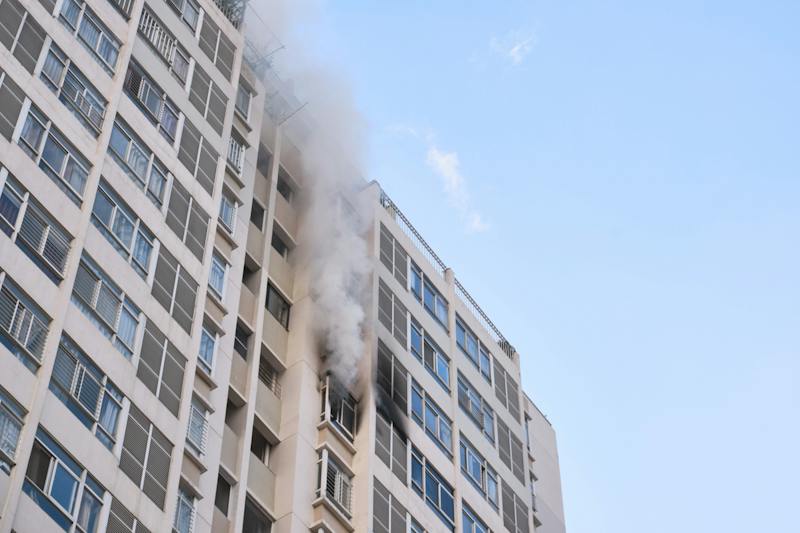
Commercial smoke damage cleanup in Los Angeles is rarely a simple wipe-down. Smoke and soot travel through ceilings, ductwork, and wall cavities, and the residue continues to affect surfaces and materials long after a fire is out. Treating it as ordinary cleaning can leave behind contamination, odor, and hidden damage.
This article explains what smoke and soot do to a commercial building, why professional remediation matters, how insurance and safety concerns come into play, and what a thorough process looks like. Quality Environmental has served Southern California commercial clients for more than 20 years.
What Smoke and Soot Do to a Commercial Building
Smoke and soot damage a commercial building by staining surfaces, contaminating porous materials, and leaving persistent odors. Even rooms that never burned can be affected, because smoke is a mixture of particles and gases that moves wherever air moves.
Common effects include:
- Discolored walls, ceilings, trim, and flooring
- Soot residue on equipment, fixtures, and inventory
- Odor trapped in insulation, ceiling tiles, and soft materials
- Contaminated HVAC components and ductwork
- Corrosion on metal surfaces over time
The residue can also be hazardous to the people cleaning it. Cal/OSHA warns that disturbed ash, soot, and dust can irritate or damage workers' lungs, which is why fire cleanup calls for HEPA vacuums and, in some cases, respirators.
Why Smoke Damage Keeps Spreading After the Fire Is Out
Smoke damage continues to spread after the fire is out because residue remains on surfaces and materials until it is removed. A fast, organized response limits losses, which is why restoration should begin within 24 to 48 hours of the fire being extinguished.
Delay lets soot settle deeper into porous materials, makes odor harder to remove, and gives corrosion time to start on metal components. If firefighting water is also present, moisture can increase the risk of mold in the same rooms.
Quality Environmental's emergency crew can deploy within two hours across Southern California. The team assesses structural damage, removes compromised materials, and addresses smoke contamination so the building returns to a safe, functional condition. If water is involved, its water-damage team can extract water and dry the property in the same response.
Hidden Smoke Contamination in HVAC Systems, Ceilings, and Wall Cavities
Hidden smoke contamination accumulates in several places where it cannot be seen during a visual inspection:
- HVAC systems
- Spaces above ceilings
- Wall cavities
Air handlers draw smoke throughout the building, so contamination can appear on floors far from the fire.
This is one reason surface cleaning alone often fails:
- Odor may return when the system restarts
- Residue in ducts can recirculate fine particles
- Rooms that look clean may still hold contamination
Professional remediation looks at the whole air pathway, not only the rooms that are visibly stained.
Quality Environmental’s approach pairs structural cleaning and odor control with air quality monitoring at three stages:
- Before the project
- During the project
- After the project
That data confirms the building is safe for occupancy rather than relying on how a room looks or smells.
Why In-House Cleaning Falls Short After a Commercial Fire
In-house cleaning falls short after a commercial fire because maintenance teams rarely have the equipment, training, or testing capabilities required to address fire residue. Standard vacuums and household cleaners can spread soot, and untested debris may contain asbestos or lead.
Cal/OSHA expects employers doing fire cleanup to:
- Identify and evaluate hazards
- Correct unsafe conditions
- Train employees
- Use HEPA vacuums for ash, soot, and dust
Cal/OSHA also notes that some fire-damaged structures may contain asbestos.
For many businesses, the risk is not only health. Improper cleaning can:
- Void documentation
- Complicate an insurance claim
- Delay reopening
Hiring a licensed contractor with documented procedures protects both occupants and the owner. See the full scope of fire and smoke damage restoration services.
How Smoke Damage Affects Insurance Claims
Smoke damage affects insurance claims because the scope of cleaning, testing, and replacement is often disputed. Clear documentation of conditions, test results, and the remediation performed provides your carrier with a record for evaluation and gives you support if questions arise.
California is paying closer attention to this issue. After the January 2025 Los Angeles County wildfires, the California Department of Insurance convened a task force to examine smoke damage claims and the standards for inspection, testing, and remediation. Its work focused on residential properties, and the department describes proposed legislation, AB 1795, as still moving through the legislative process.
Commercial owners should treat this as context rather than a rule for their own claims. Quality Environmental records the full extent of damage for your insurer on arrival and works with your representatives to share documentation and support the claim.
How Professional Smoke and Soot Remediation Works
Professional smoke and soot remediation follows a defined sequence that moves from stabilization to cleaning to verification. Quality Environmental builds each step into a site-specific plan for the building:
- Emergency stabilization and documentation. The team records damage for insurance and secures the property with fencing, boarding, bracing, and roof coverage.
- Smoke and soot remediation. Crews complete structural cleaning and odor control, then scrub, sand, prime, and paint compromised walls, ceilings, trim, and floors.
- Hazardous material management. Contaminated materials such as insulation and furnishings are identified, contained, and disposed of at approved facilities. Items that can be restored are recovered.
- Debris removal and site restoration. If demolition is needed, debris is hauled to approved facilities, and the team can handle carpentry, roofing, plumbing, electrical, HVAC, and painting repairs.
- Testing and clearance. Air quality is monitored before, during, and after the project, with third-party clearance and a full documentation package.
If damage is limited to one area, negative-pressure containment can isolate the work zone, allowing unaffected areas to remain in use. For heavy smoke or extensive demolition, temporary closure or relocation is recommended.
Professional Remediation Matters
Smoke and soot damage goes deeper than what is visible, and improper cleaning can spread contamination and complicate claims. A tested, documented process gets Los Angeles commercial buildings back in service safely. For emergency response, call Quality Environmental at (866) 230-5451.
Disclaimer: This article provides general information about smoke and soot damage and is not an assessment of any specific property or insurance claim. Conditions, coverage, and appropriate remediation methods vary by building and situation.
Sources